What book could you read over and over again?
My mentor looked me dead in the eye the other day and asked the question every true bookworm secretly dreads: “If you could only read one book for the rest of your life, over and over again, which one would it be?”
I didn’t even blink.
“Dune,” I said. “Frank Herbert’s Dune. No contest.”
He raised an eyebrow like he expected me to name something more obscure, maybe a shiny new release or some hyper-intellectual classic nobody actually finishes. But nope. Dune has been my desert island book since the first time I cracked it open as a wide-eyed teenager, and every single reread has only made me love it more. If you’re a sci-fi fan who’s ever wondered why certain stories refuse to let you go, stick with me. I’m about to take you on a journey through the dunes of Arrakis, and by the end you might just find yourself ordering a fresh copy too.
Discovering Dune: The Moment Everything Changed
Picture this. It’s a rainy afternoon, I’m fifteen, and I’m bored out of my skull in the local library. I wander the sci-fi aisle because, let’s be honest, that’s where the cool stuff lives. My hand lands on this thick paperback with a weird-looking sandworm on the cover and the single word “Dune” in bold letters. I flip it open, read the first paragraph, and… I’m gone.
That opening line about the desert planet still gives me chills. By the time I hit the Bene Gesserit litany against fear, I was hooked. I stayed up until 3 a.m. devouring chapters, completely oblivious to the world around me. When I finally closed the book two days later, I felt like I’d lived an entire lifetime on a planet I’d never even known existed.
That was over twenty years ago. I’ve probably read Dune fifteen times since then—maybe more if you count the times I’ve dipped back into favorite chapters on a whim. Each pass feels like visiting an old friend who somehow always has new stories to tell. And that, right there, is the magic. Most books give you everything they’ve got on the first read. Dune? It’s layered like the desert itself—sand on top, secrets underneath, and something alive and dangerous moving far below.
The Epic That Keeps Unfolding (Without Spoiling a Thing)
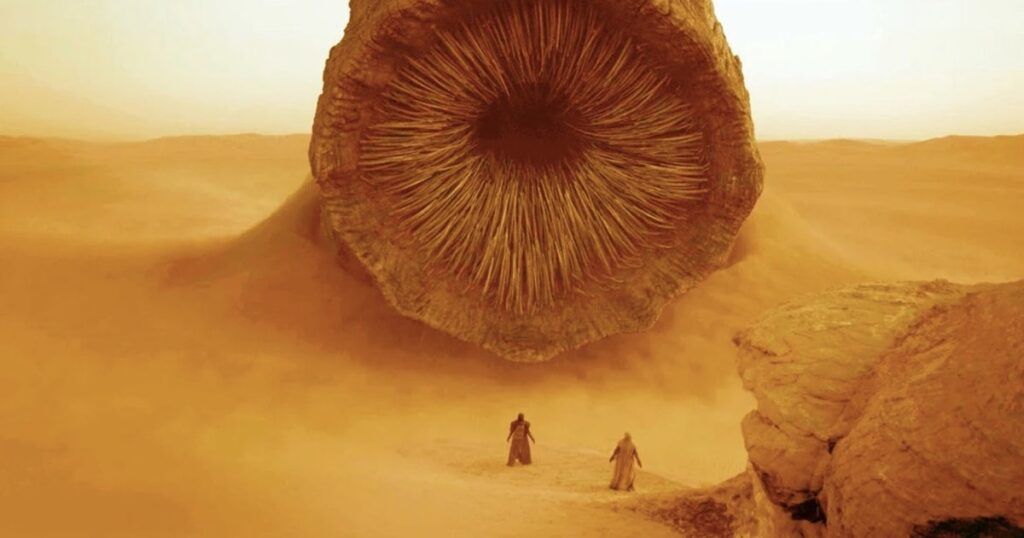
If you haven’t read it yet, I envy you. There’s something sacred about that first journey across the dunes with Paul Atreides and his family. You’re dropped into a universe that feels fully formed from page one: feudal houses battling for control of the most valuable resource in the galaxy, giant sandworms that can swallow entire spice harvesters whole, and a desert culture so rich it makes the Star Wars universe look like a theme park.
But here’s what makes it reread-proof: Herbert doesn’t just hand you the world on a silver platter. He trusts you to piece it together. The appendices at the back? They’re not filler—they’re the key to understanding why everything feels so real. Ecology, religion, politics, psychology, even the economics of spice addiction… it’s all there, woven so tightly that you catch new connections every single time.
I remember the third reread hitting me like a freight train. Suddenly I noticed how every conversation drips with double meanings. The fourth time through, I was obsessed with the environmental undertones—how Herbert basically predicted climate collapse and resource wars decades before they became dinner-table topics. By the seventh or eighth pass I was underlining passages about power and destiny that felt uncomfortably prophetic in our current world. The book never changes, but I do. And every time I open it again, it meets me exactly where I am.
World-Building So Good It Ruins Other Books
Let’s talk about Arrakis itself for a second, because holy stars, that planet is a character. Herbert didn’t just invent a desert world—he made you feel the heat on your skin, the grit between your teeth, the way the sand sings under your feet. The stillsuits that recycle your body’s moisture? Genius. The way the Fremen treat water like the most precious currency imaginable? It changes how you look at every glass you pour from then on.
I’ve read a lot of sci-fi—Foundation, Neuromancer, Hyperion, the Culture novels—and they’re all brilliant in their own way. But none of them make the setting feel this alive. You don’t just read about Arrakis; you survive it. You learn to listen for the wormsign. You start wondering what your own “water of life” moment might look like. That level of immersion is rare, and it’s why I keep coming back. Every reread is like slipping on those stillsuits again—suddenly everything feels sharper, more immediate.
Characters That Grow With You
Paul Atreides isn’t your typical chosen-one hero, and that’s the point. He’s brilliant, burdened, and terrifyingly human. One reread you’re rooting for the kid who just wants to protect his family. The next time through you’re watching him become something else entirely, and you feel the weight of it in your chest. Lady Jessica, Duke Leto, Chani, Stilgar, the Baron—every single one of them has layers upon layers.
I’ve caught myself arguing with the characters out loud on different reads. “Paul, don’t do it!” I’ve whispered at 2 a.m. during one pass. Another time I found myself nodding along with the Fremen’s harsh wisdom like I was one of them. These aren’t archetypes; they’re people making impossible choices in an impossible universe. That’s why they stay with you long after you close the book.
Themes That Feel More Urgent Every Single Year
Here’s the part that keeps me coming back even when I think I know the story inside out: the themes never get old. Ecology? Check—Herbert was writing about desertification and corporate exploitation of natural resources in 1965. Politics? The way power corrupts and how religion can be weaponized feels ripped from today’s headlines. Destiny versus free will? I still wrestle with that one every time Paul faces his visions.
And don’t get me started on the litany against fear. “I must not fear. Fear is the mind-killer.” I’ve repeated those words to myself before job interviews, tough conversations, even during turbulent flights. They work. Every single time. That’s not just good writing; that’s wisdom disguised as fiction.
My Personal Reread Ritual (And Why It Never Gets Old)
I have a system now. Every couple of years—usually when life feels chaotic—I clear a weekend, make a big pot of strong coffee, and dive back in. No phone, no distractions. Just me, the book, and the desert.
Sometimes I read the whole saga straight through (yes, I’m one of those people who loves the later books too, even when they get weird). Other times I just revisit the first novel and stop when Paul’s story feels complete. Either way, I always find something new. Last year it was the way Herbert uses smell as a narrative device—spice, blood, ozone after a storm. The year before that it was the poetry of the chapter headings.
It’s become comfort food and intellectual workout all at once. When the real world feels too loud or too uncertain, Dune reminds me that human beings have been telling stories about power, survival, and hope since we first looked up at the stars. And somehow, that makes everything feel a little more manageable.
If You Haven’t Read It Yet… Or If You Have
Look, if you’re sitting there thinking “I’ve seen the movies, I’m good,” please do yourself a favor and read the book. The movies are gorgeous—Denis Villeneuve did an incredible job—but they’re the tip of the iceberg. The novel has depths the screen can’t reach.
And if you’re like me and you’ve already read it a dozen times? Maybe it’s time for another pass. Grab a notebook this go-round. Jot down the lines that hit different now. Notice how your perspective has shifted since the last read. You’ll be amazed.
There are so many incredible sci-fi books out there—stories that expand your mind and break your heart in the best ways. But if I could only keep one on my shelf for the rest of my life, it’s Dune. Every single time.
So, Mentor… That’s My Answer
I’d read Dune over and over again because it never stops teaching me. Because the desert still calls after all these years. Because in a universe that sometimes feels like it’s spinning out of control, Frank Herbert gave us a story that says: pay attention, adapt, and maybe—just maybe—find your own path through the storm.
What about you? If someone asked you the same question right now, which book would you choose? Drop it in the comments. I’m always looking for my next obsession, even if I already know where I’ll be spending most of my rereading hours.


Leave a comment